Bookmarking vs Note-Taking: When to Use Each
Written by LinkVault Team
People often debate bookmarking vs note-taking as if they are competing systems, but the real question is not which one is better — it is when should you use each one. The answer matters more than you might think, because choosing the wrong approach for a given piece of content determines whether you can actually retrieve and use that information later. Save a link when you should have written notes, and you end up re-reading the entire source just to find the one insight you needed. Write notes when you should have saved a link, and you end up with a fragmented copy that loses the original context and credibility.
The confusion arises because both approaches feel productive in the moment. Saving a link takes two seconds and gives you the satisfaction of having captured something useful. Writing notes takes longer but feels like deeper engagement with the material. The problem is that neither action alone creates a reliable knowledge system. A saved link without notes is just a pointer — you know where the information is, but not why you cared or what you wanted to take from it. Notes without a source link are floating assertions — you know what you thought, but cannot verify the original context or go deeper if needed.
This guide shows you when to use each approach, why combining them is more powerful than either alone, and how to build a system where every piece of saved knowledge has both a source link for depth and personal notes for context. Instead of choosing between bookmarking and note-taking, you get the strengths of both in a single workflow.
When to Bookmark (Save Links)
Bookmarking — saving just the link — is the right choice when the source itself is the primary value and your own interpretation is secondary. This is the case for reference material, living documentation, visual resources, and content where the original context and formatting matter as much as the information itself. The key test is: would opening this link give me what I need faster than reading my own notes would? If yes, bookmark it.
Scenarios Where Bookmarking Wins
- The source will be updated over time — official documentation, API references, tool changelogs. A note you write today becomes stale; the link always points to the current version.
- You need to cite or share the original source — in professional or academic work, credibility comes from pointing to the original, not from your personal notes about it
- The full content matters, not just key points — a comprehensive tutorial, a detailed case study, or a deep technical explanation where a summary would lose critical detail
- Visual examples or formatting are important — design galleries, infographics, interactive demos, or anything where the visual presentation is part of the information
- The information is factual and unchanging — API endpoints, specifications, data references. A link to the authoritative source is more trustworthy than your copy of the same facts
When to Take Notes (Write Text)
Note-taking — writing your own interpretation in your own words — is the right choice when your synthesis is more valuable than the source, or when the source might not be available later. This is the case for multi-source analysis, personal reflections, evolving thinking, and content that is likely to disappear. The key test is: would my own notes give me what I need faster and more reliably than re-opening the source? If yes, write notes.
Scenarios Where Note-Taking Wins
- You need to synthesize multiple sources — when the value comes from combining insights from several articles into a single coherent view, your synthesis is the knowledge, and individual links are just the ingredients
- You are developing your own thinking — when you are forming an opinion, building an argument, or working through a problem, your notes capture your intellectual process in a way a link cannot
- The source might disappear or change — social media posts, forum discussions, and blog posts that could be deleted. Your notes preserve the key points even if the original vanishes
- You need quick reference without opening links — for information you need frequently and fast, your own condensed notes are quicker to scan than re-opening and navigating a full article
- You are tracking personal reflections — when the value is in your reaction to the content, not the content itself, notes capture what a link never could
The Combined Approach: Bookmark with Notes
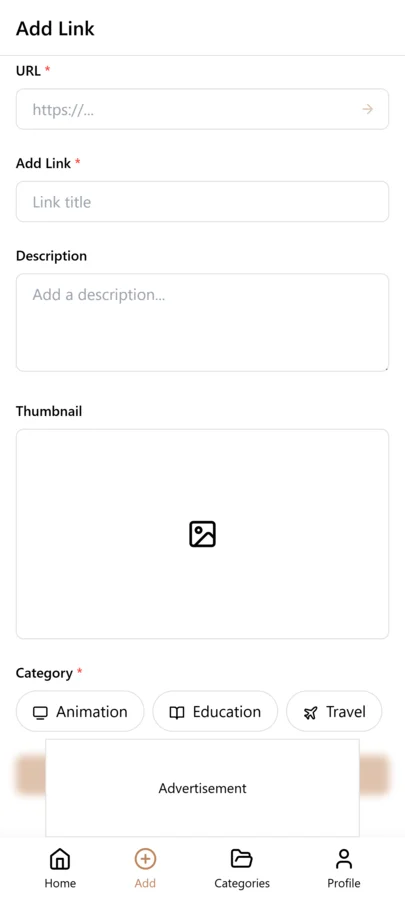
The most effective system does not choose between bookmarking and note-taking — it combines both. For most content, the ideal approach is to save the link AND add your own notes. The link gives you the full source for when you need depth, verification, or context. Your notes give you the quick summary, your personal takeaways, and the context of why this matters to you. This combined approach takes only slightly longer than bookmarking alone but gives you the strengths of both methods.
- Save the link for the full source — this preserves the original context, lets you go deeper when needed, and supports the original creator
- Add notes with YOUR takeaways and insights — not a reproduction of the content, but your interpretation of what matters and why
- Note why this matters to you specifically — which project it relates to, what problem it solves, what decision it informs
- Add how you might use this — concrete next steps or applications so the knowledge translates into action rather than sitting dormant
- Tag by concept and project — use consistent tags so this item connects to related knowledge you have already saved
- Link to related bookmarks via shared tags — the tag system creates connections between items automatically, building a web of related knowledge rather than isolated saves
Practical Examples: Bookmark vs Notes vs Combined
The best way to internalize when to use each approach is to see them applied to real scenarios. Here are six common content types with the recommended approach and the reasoning behind each choice. Notice that the combined approach — save the link with notes — is the right call for most content, while pure bookmarking and pure note-taking are the exceptions for specific edge cases.
Real-World Scenarios
- Tutorial: Combined — bookmark the link for the full step-by-step instructions, add notes on which steps you struggled with and how you adapted them to your project
- Opinion article: Combined — bookmark for the original argument and context, add notes summarizing the key points and your own reaction to the author's position
- API documentation: Bookmark only — the docs will be updated, your notes would go stale, and you need the authoritative source for accuracy. Add a one-line note about when you need this endpoint.
- Conference talk video: Combined — bookmark for the full talk, add notes on the specific insights that resonated and ideas you want to apply to your work
- Social media discussion: Notes-first — the content may be deleted, so capture the key points in your notes, and save the link as a secondary reference that may or may not survive
- Design inspiration gallery: Bookmark only — the visual content is the point, and your notes cannot reproduce the visual examples that make the source valuable
Frequently Asked Questions
Should I copy content into notes or just save the link?
Save the link and add YOUR interpretation and takeaways. Do not duplicate the content — that creates maintenance overhead, potential copyright issues, and a false sense of having captured the knowledge when all you really did was copy it. Your notes should add value the original does not: your personal context, your takeaways, how it applies to your specific situation. If you find yourself copying large sections of the original, stop and ask whether a link alone would suffice — for reference material, it usually would. Reserve note-taking for your synthesis and interpretation, which is the part only you can provide.
What if the link breaks or content gets deleted?
For critical information that you cannot afford to lose, capture the key points in your notes at the moment you save the link. This way, even if the original disappears, your notes preserve the essential knowledge. For most content, a broken link is a minor inconvenience — you can usually re-find the information through search. The combined approach of saving the link with notes handles both cases: the link works when the source is available, and your notes provide a fallback when it is not. For social media content and forum posts that are especially likely to disappear, prioritize detailed notes over the link.
Can I combine bookmarks and notes in one tool?
Yes, and that is exactly what we recommend. LinkVault lets you save links with rich notes attached, combining both approaches in a single workflow. You do not need separate tools for bookmarking and note-taking — that fragmentation is what makes retrieval difficult in the first place. When everything lives in one searchable library with consistent tags and categories, you can find any saved knowledge in seconds regardless of whether it started as a bookmark or a note. The combined approach also means you only need one capture habit: see something valuable, save the link, add a note, tag it, done.
How do I decide between bookmarking and note-taking in the moment?
Ask yourself two questions. First: will I need the full original source later, or just the key takeaway? If you need the full source, bookmarking is essential. Second: is my own interpretation or synthesis the main value, or is the original content the main value? If your interpretation is the main value, notes are essential. For most content, the answer to both questions is yes — you want the source for depth and your notes for speed — which is why the combined approach is the default. Reserve pure bookmarking for reference material where your notes add nothing, and pure note-taking for content that may disappear or where your synthesis spans multiple sources.
How long should my notes be?
One to three sentences for most saved items — enough to capture why you saved it and the key takeaway, not so much that note-taking becomes a chore. For items where your synthesis or interpretation is the main value — multi-source analysis, personal reflections, complex arguments — longer notes are justified. The goal is notes that are useful at retrieval time: when you search your vault three months from now, your notes should immediately tell you whether this item is what you are looking for and remind you of the key points without needing to re-open the source. If a one-sentence note does that, it is the right length.
What if I already have bookmarks in one tool and notes in another?
Consolidate into a single system over time rather than trying to migrate everything at once. Start using LinkVault for all new saves — both links and notes — so new knowledge accumulates in one searchable place. For your existing scattered content, import your most important bookmarks and notes into LinkVault with proper tags and categories as you encounter the need for them. Do not spend a weekend migrating everything — most old bookmarks and notes are stale and will never be referenced again. The ones that matter will surface naturally as you work, and you can migrate them on demand with proper organization at that point.